Practical Protection Over Performative Compliance
A program that looks good on audit and fails in the field isn't a safety program — it's a liability. Every deliverable is built to hold up where it matters: on the job site.
14 years inside the biggest HSE operations in South Texas. One belief that never changed: safety programs should protect people, not just protect companies from people.
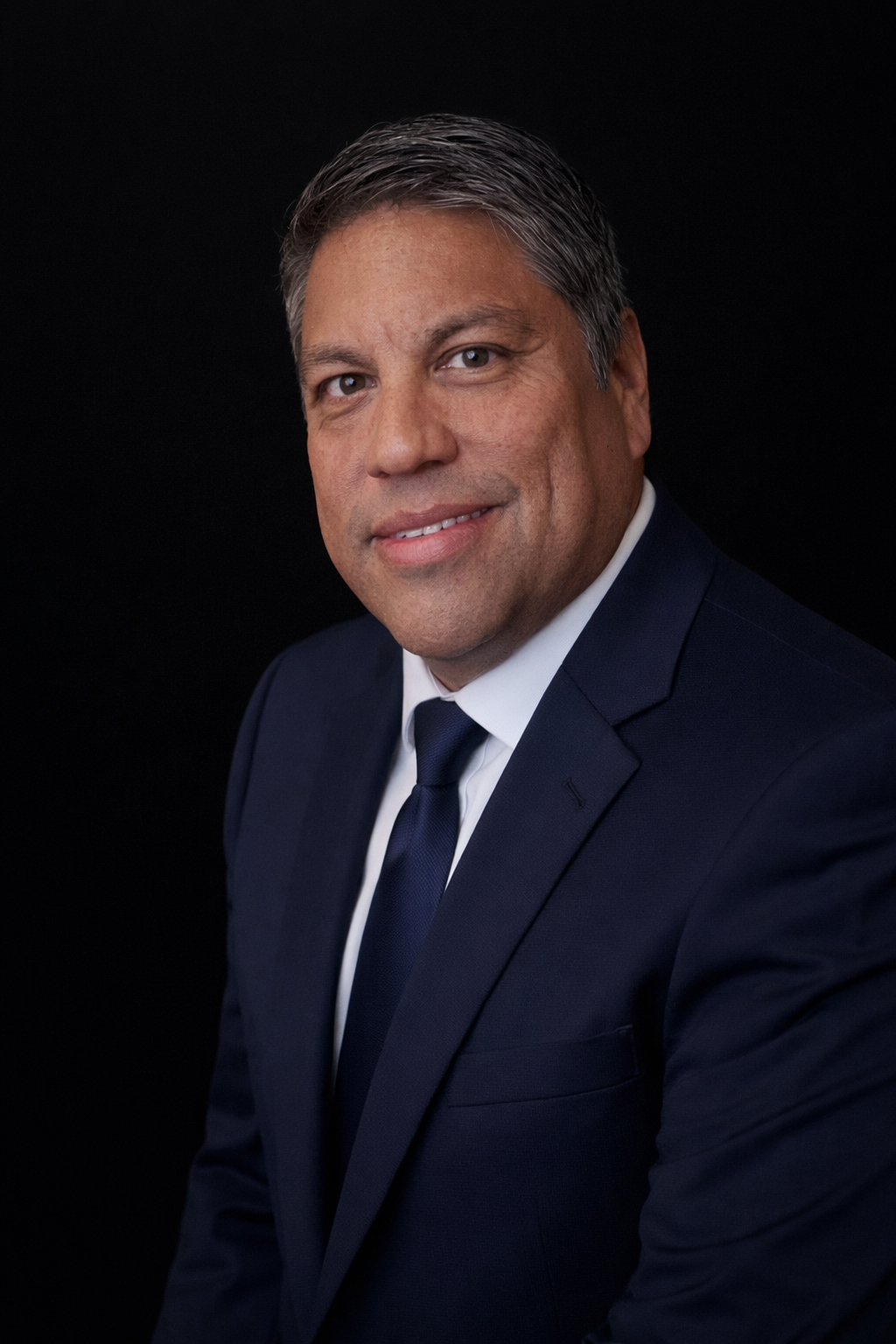
Jesus De La Rosa spent 14 years managing HSE programs across multiple product lines. He supervised facility operations across 87 SLB facilities in Texas, Oklahoma, Louisiana, and Mississippi — drilling operations, facilities, environmental closures, vendor programs. He worked with the biggest operators in the basin: ConocoPhillips, Marathon Petroleum, EOG Resources, Murphy Oil, Devon Energy. He knows what those operators expect. What gets flagged. What gets you off their vendor list before you even know there was a problem.
But the thing that shaped Vanguard wasn't the credentials. It was what he kept seeing behind them.
He saw what happens when safety programs are built to pass reviews instead of run crews. Training delivered to satisfy a documentation requirement rather than change what a crew does when it matters. Programs that look right on paper and don't hold up in the field — not always because of bad intentions, but because nobody ever built them for the people who actually had to use them.
He kept thinking the same thing: every one of those workers has a family waiting for them at home. A safety program that only protects numbers isn't doing what a safety program is supposed to do.
After 14 years of that, he made a decision. He stopped working inside that system and started building something outside it.
The contractors doing the real work in Coastal Bend — the 50-person pipeline crew, the industrial maintenance company, the maritime services firm at the Port — they needed exactly what the majors kept for themselves: senior-level HSE expertise that works in the field, not just on paper. Without the cost of a full-time hire they weren't ready to carry.
That's Vanguard. Field-proven safety expertise, built for the contractors who can't afford to get it wrong.
"Everybody talks about being proactive. But when management is mostly reactive with their approach — and then tell their crews to be proactive — that's a problem. You can't build a real safety culture from the top down with words while doing the opposite with decisions. That's what I'm here to fix."— Jesus De La Rosa, HSE Specialist & Facility Supervisor
Operators Interfaced
Every credential listed below was earned in the field — not just earned on paper.
A program that looks good on audit and fails in the field isn't a safety program — it's a liability. Every deliverable is built to hold up where it matters: on the job site.
Companies that wait for the audit, the incident, or the failed prequalification pay more — in money, time, and trust. Vanguard gets you ahead of those problems before they happen.
The worker in the field is not a man-hour figure or a line on a TRIR report. He has a family. Training that doesn't reach him is not training. It's paperwork that leaves him exposed.
Deep knowledge of ISNetworld, Avetta, and Veriforce — what causes holds, what reviewers look for, and how to clear grades before they cost you a contract.
A full-time HSE director costs $90K–$130K/year before benefits. Vanguard delivers the same level of guidance on a flexible basis — when you need it, sized to what you can support.
Corpus Christi, Coastal Bend, South Texas. Knows the operators, the job sites, the terrain. This is a relationship market — Vanguard is part of it, not flying in from Houston.
The first conversation is free. We'll tell you exactly what we see, what's at risk, and what it would take to fix it.
Book Your Free Assessment